AI Quiz
Led the design of an AI-powered quiz experience for PhysicsWallah, built to cut first-time drop-off and turn quiz creation into a habit. Targeted DAU growth from 45K to 2L.
PhysicsWallah · 2025
PhysicsWallah’sAItoolshadstrongadoption,butquizgenerationwasslow,sofirst-timeusersdroppedoffbeforetheyeverfeltthevalue.IstudiedwhatmakeslearningfeelinstantinDuolingo,BrilliantandSolvely,framedthreehypothesesandtworealrisks,thendesignedafirstrunthatlandsanearlywin,hidesthelatency,andteachesthefeaturequietly.Nowinrollout,measuredagainstretention,engagementandacquisition,withaDAUgoalof45K→2L.
- Role
- Product Design
- Year
- 2025
- Product Managers
- Hemant · Ajay
- Engineering
- Sonu · Rajat
What is it?
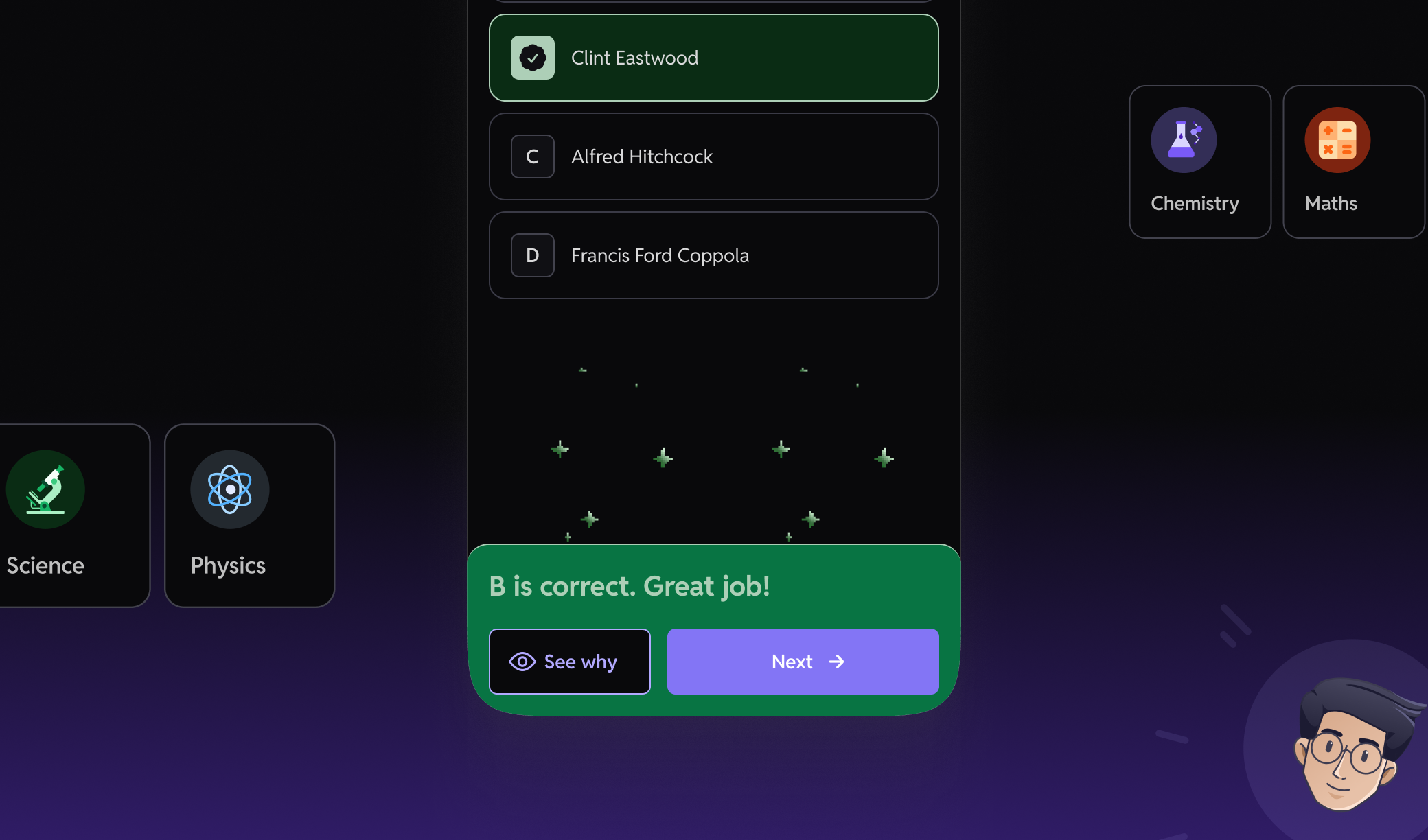
AI Quiz is an AI-powered feature inside PhysicsWallah that lets students generate personalised quizzes instantly from an image, a YouTube link, a PDF or any study material. The goal was to turn quiz creation from a slow, high-friction process into something that feels instant and habit-forming, especially for first-time users who drop off before they ever see the value.
The challenge
PhysicsWallah’s AI Guru tools had strong adoption (roughly 60–70% of subscribed users asked at least one query), but quiz generation was slow, so first-time users left before experiencing value. We needed to deliver an immediate aha moment, keep returning users engaged, and strip the friction out of quiz creation: turn a utility into a habit.
The approach
I started by studying what works in products like Duolingo, Quizlet, Brilliant and Solvely, the ones that make learning feel instant and rewarding. Five patterns emerged:
- Never overwhelm new users.
- Begin with purpose, not features.
- Progressive disclosure.
- Simplification.
- Smart nudges.
From there I formed three hypotheses around student-created quizzes (improving engagement, converting free users, and impacting retention) and mapped two real risks: latency killing the first run, and quizzes not feeling personal enough.
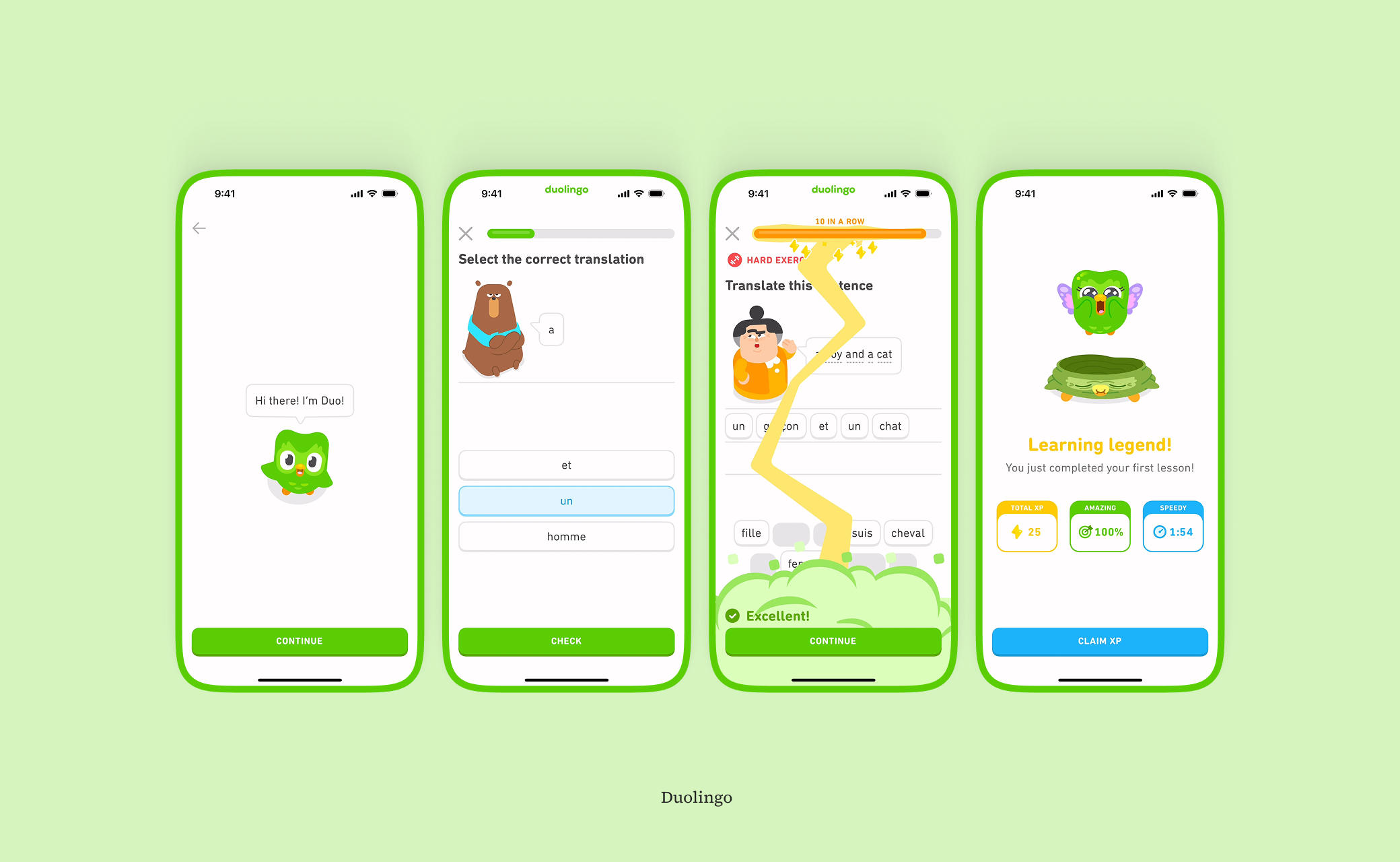
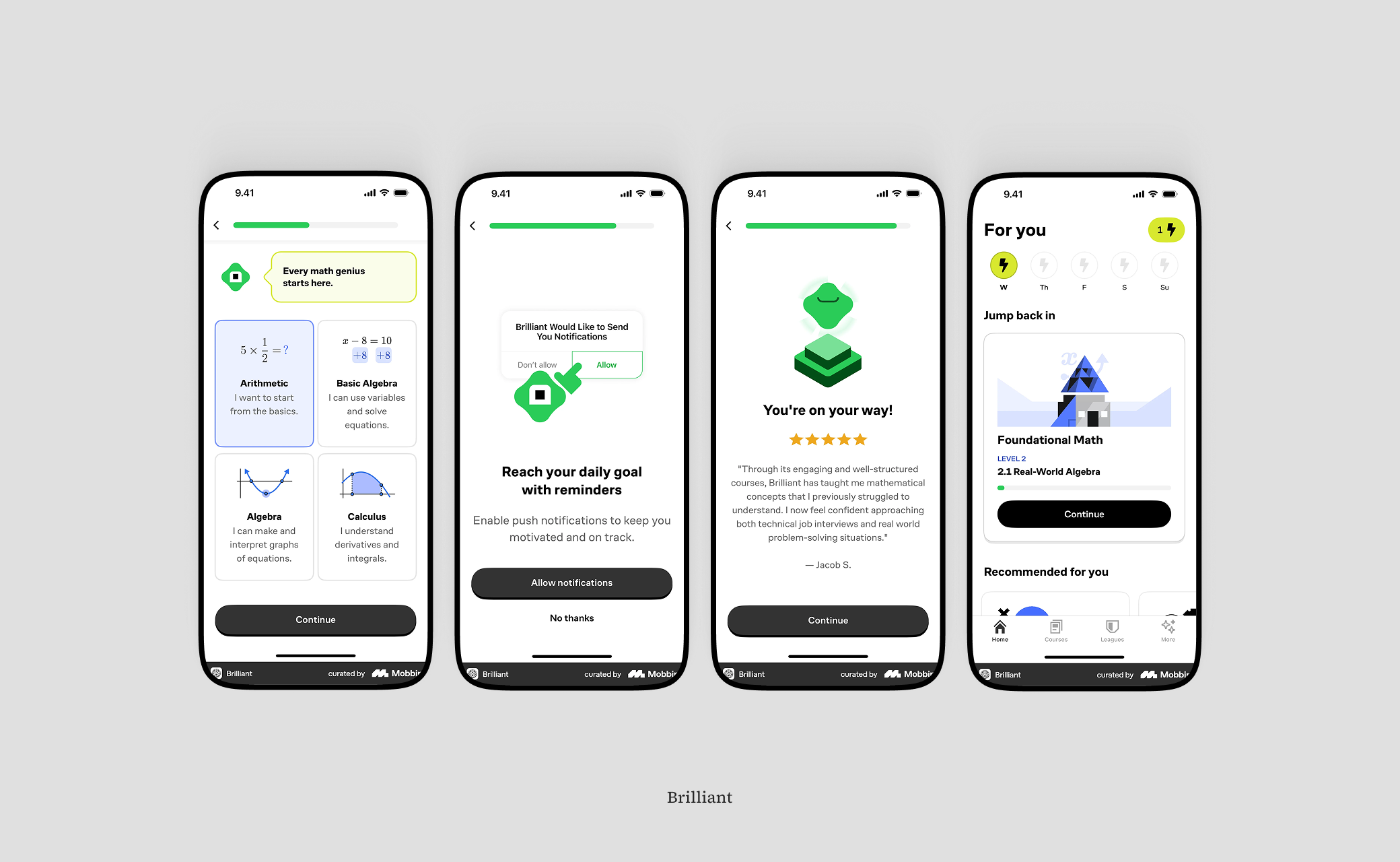
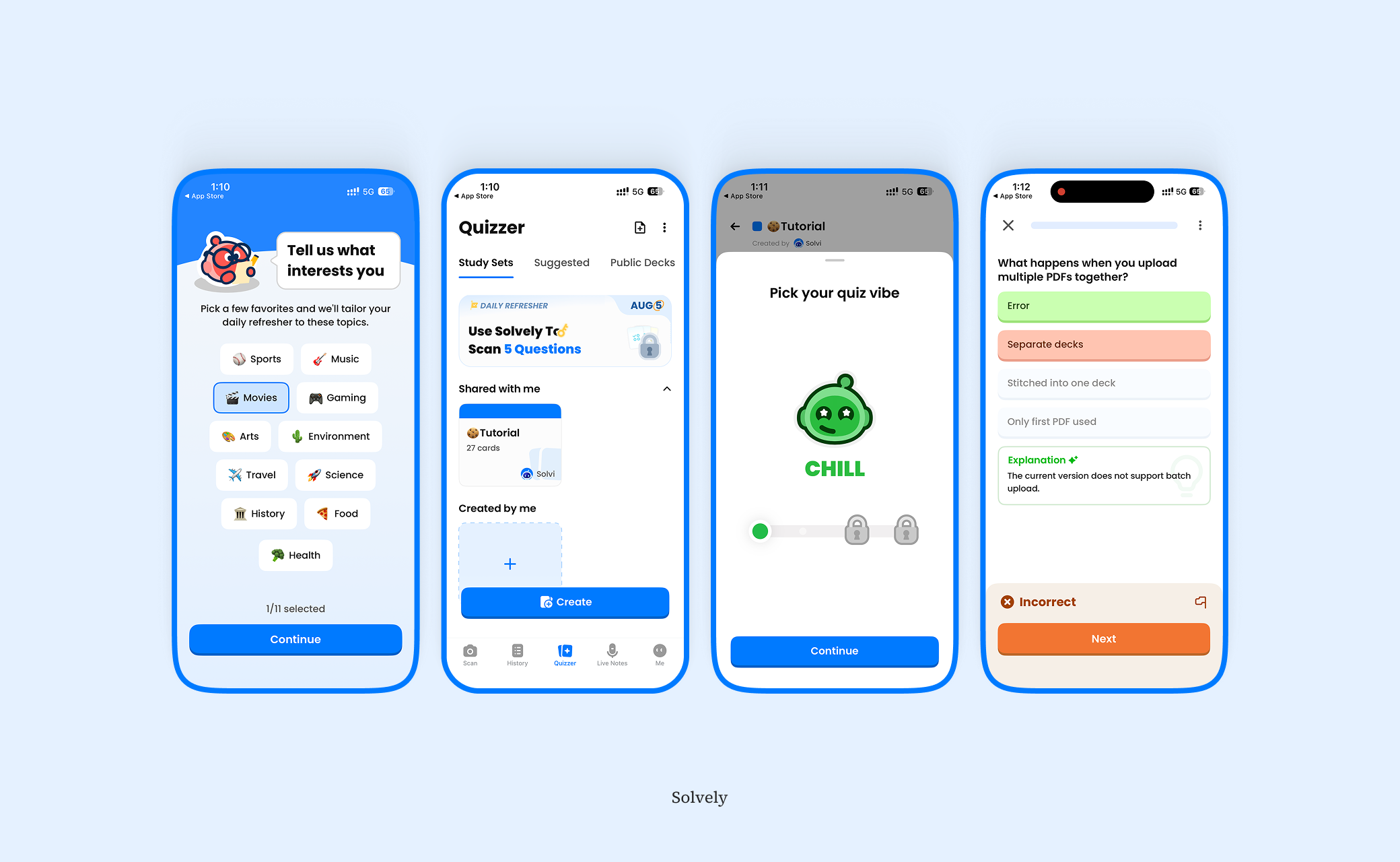
Competitive analysis.
Hypothesis & risks
- Letting students build quizzes from their own material lifts engagement and retention.
- It gives students who don’t pay an easy way to try the AI tools.
- Students create quizzes regardless of location, curriculum or stage of prep, which feeds retention.
- Risk: latency on the first run drives drop-off; quizzes that don’t feel personal blunt engagement.
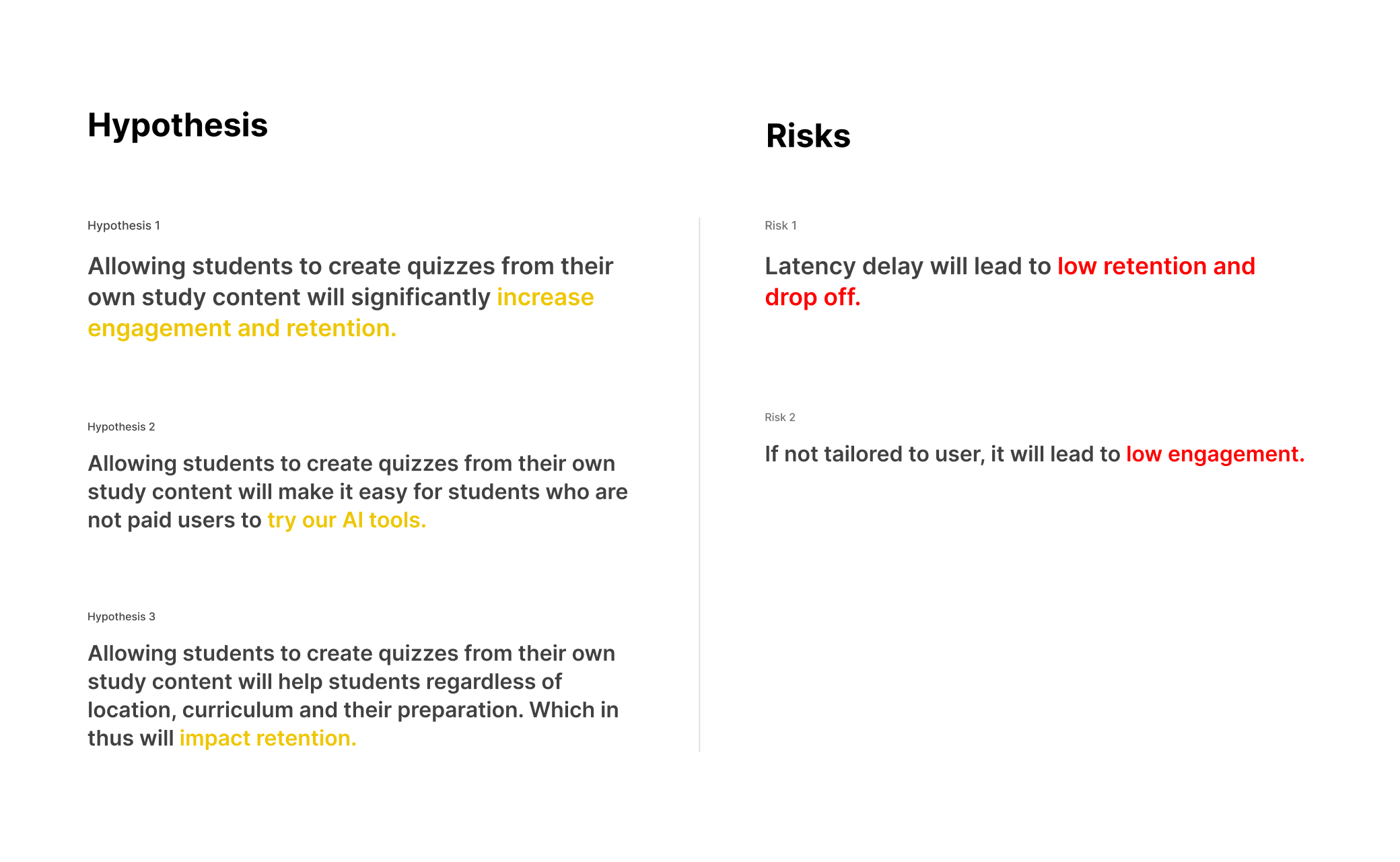
Hypothesis & risks framework.
Concepts explored
I explored multiple concepts for both the first-time experience and for friction reduction, each optimising for a different behavioural hook. Two experiences to solve for:
- The first-time experience.
- Reducing friction, with an exit strategy.
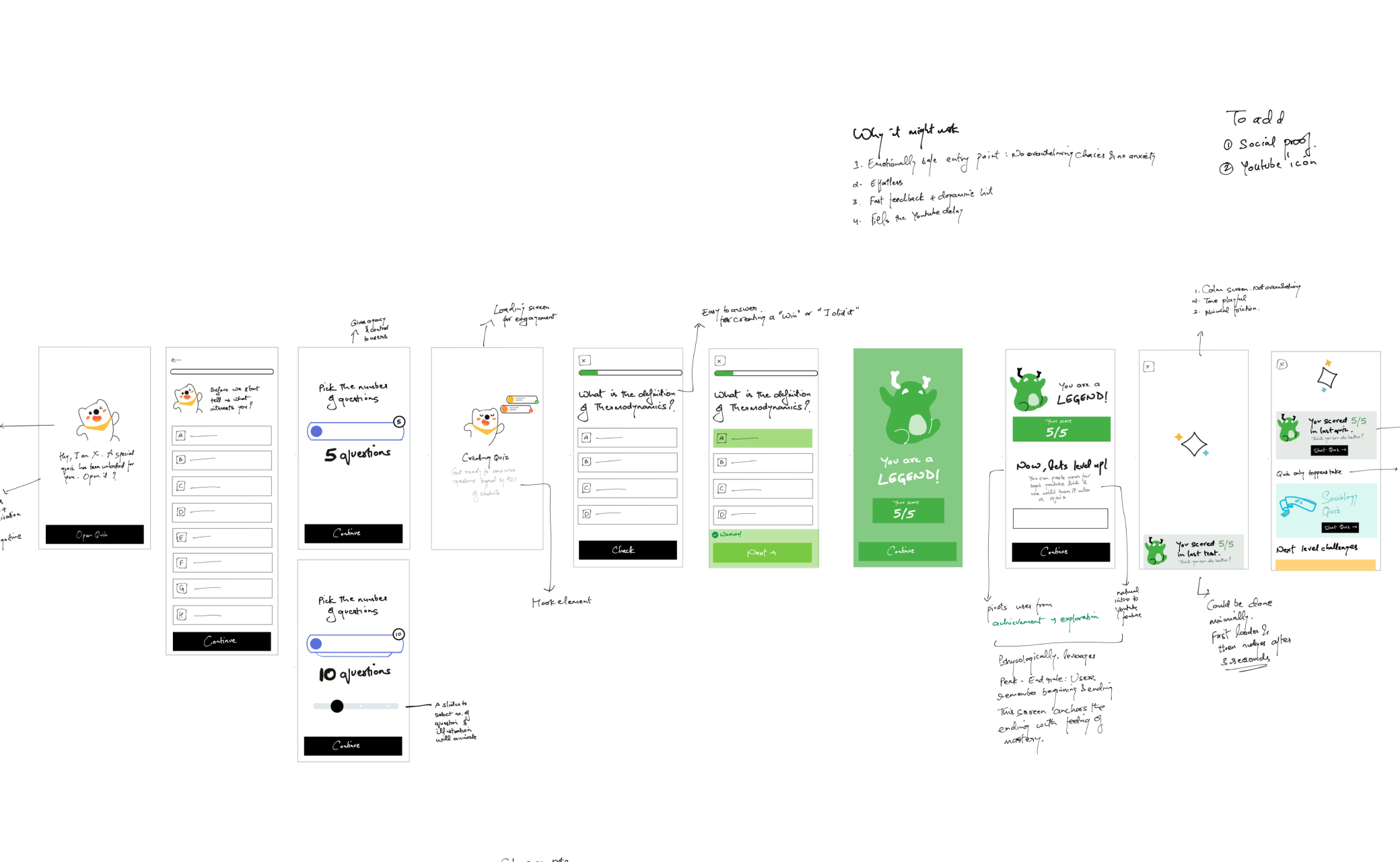
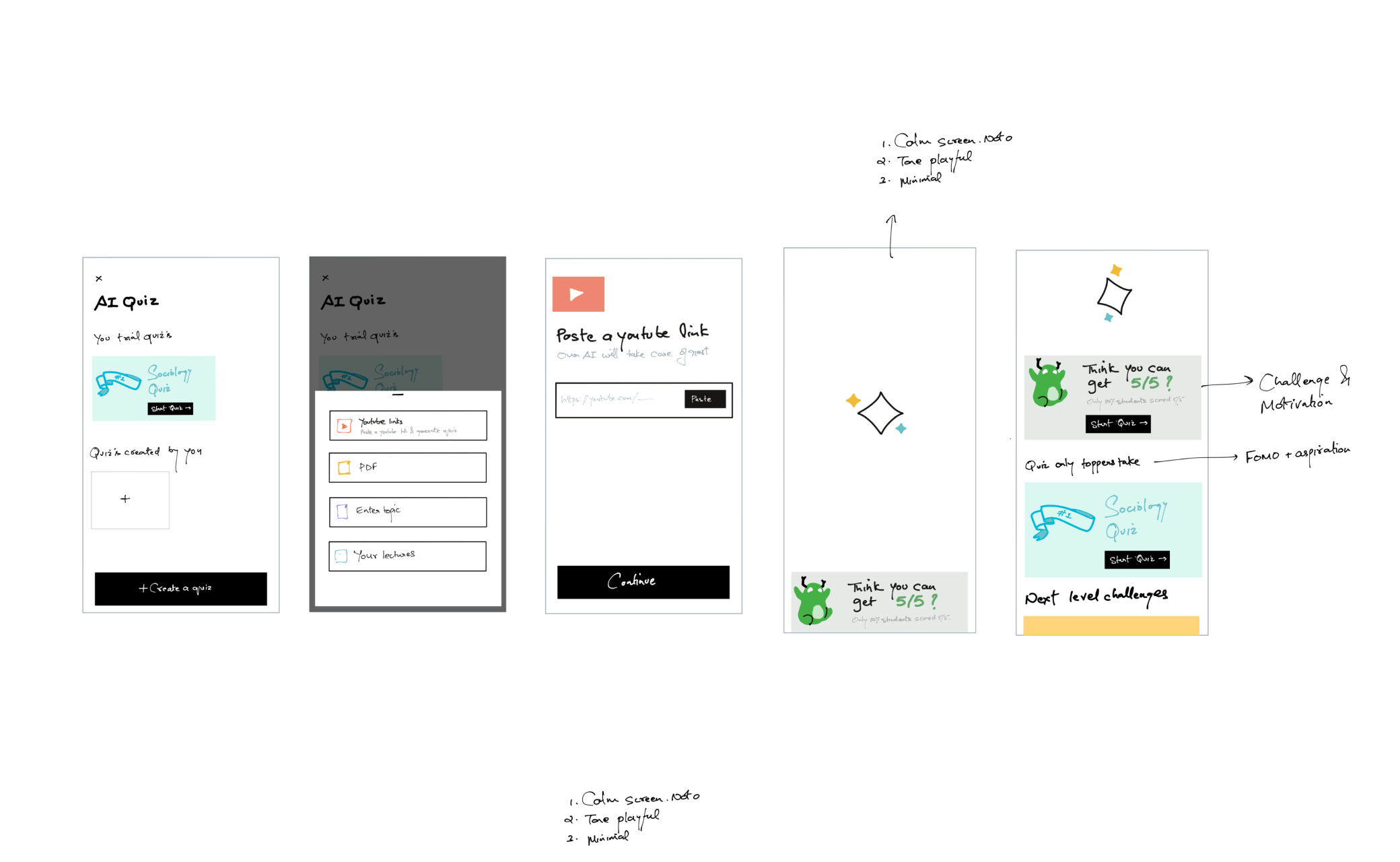
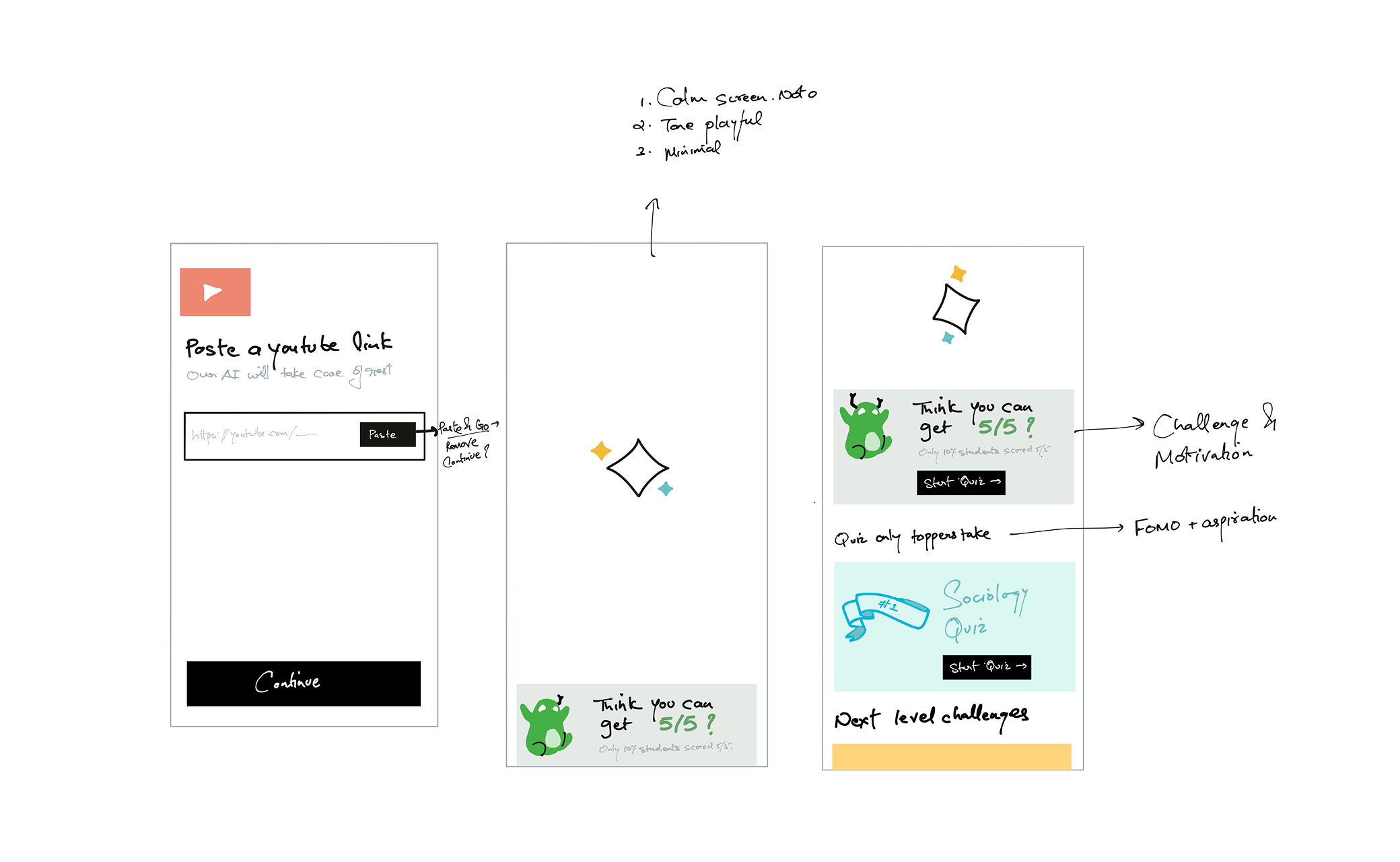
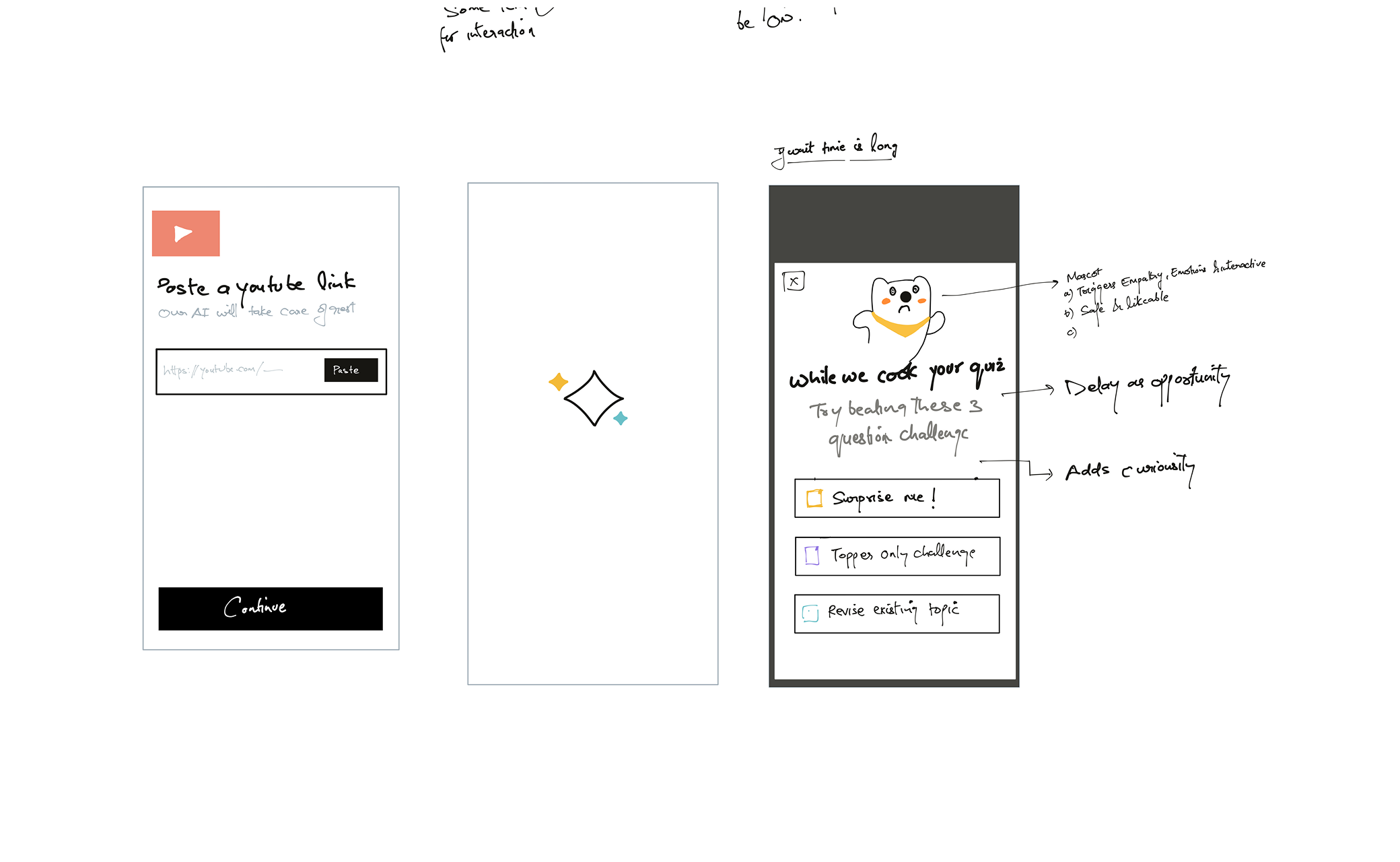
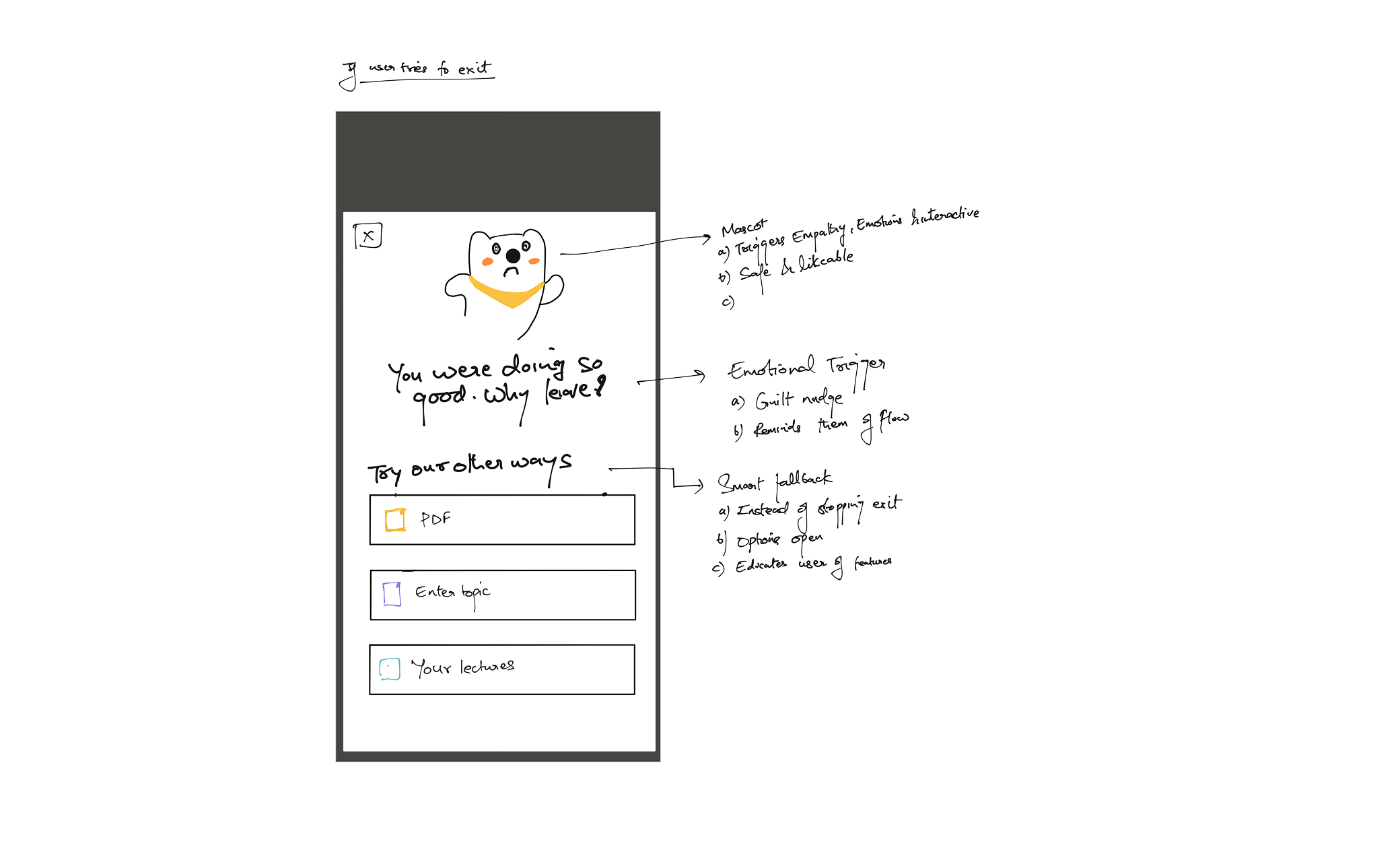
Concepts explored.
Decisions
Stakeholders wanted the best of each concept, so the final direction held on to:
- An emotionally safe entry point.
- A quiz with easy wins: the “I did it” moment.
- Achievement leading into exploration.
- A calm latency screen.
- Subtle feature education.
- A proper exit strategy.
Final design
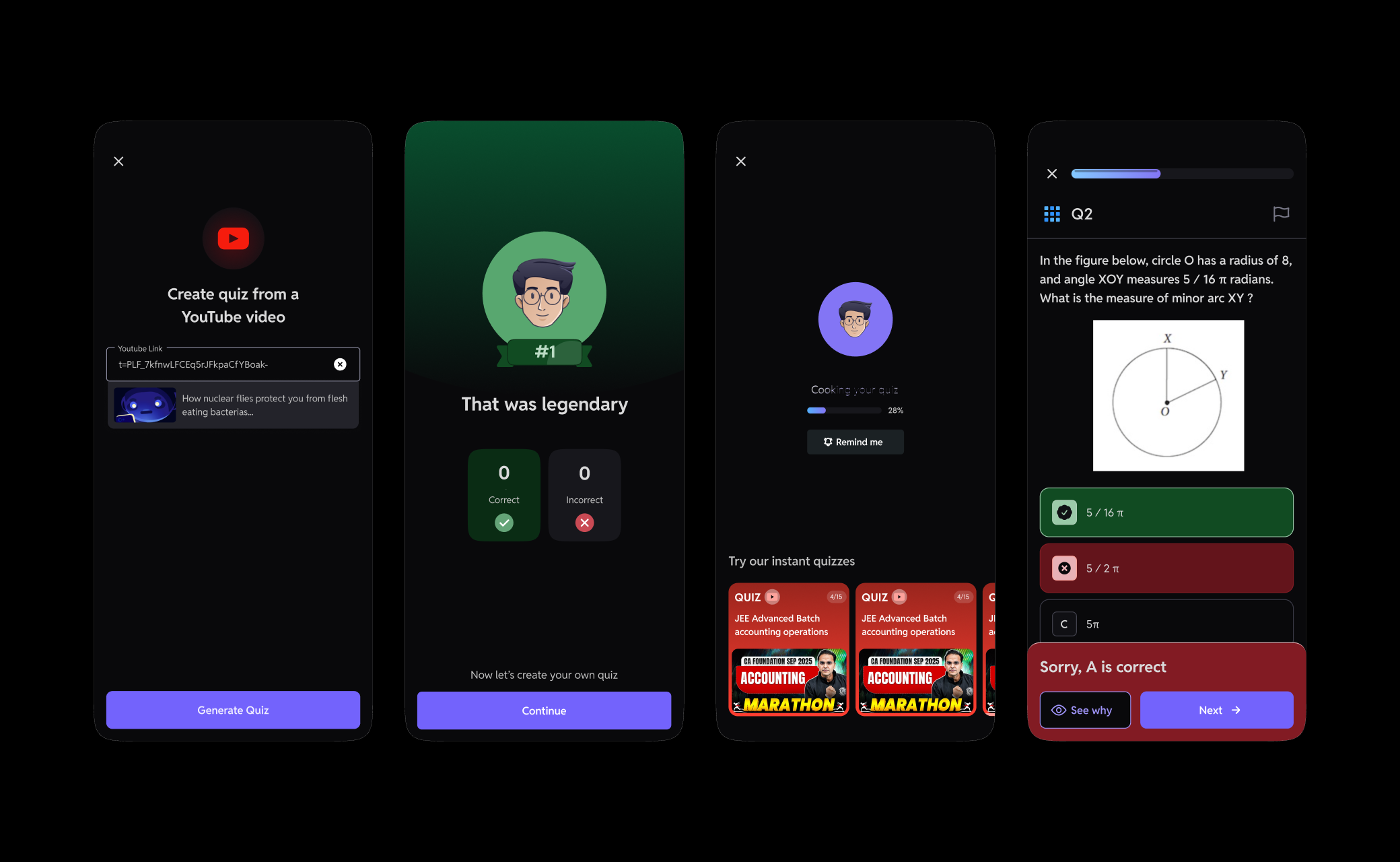
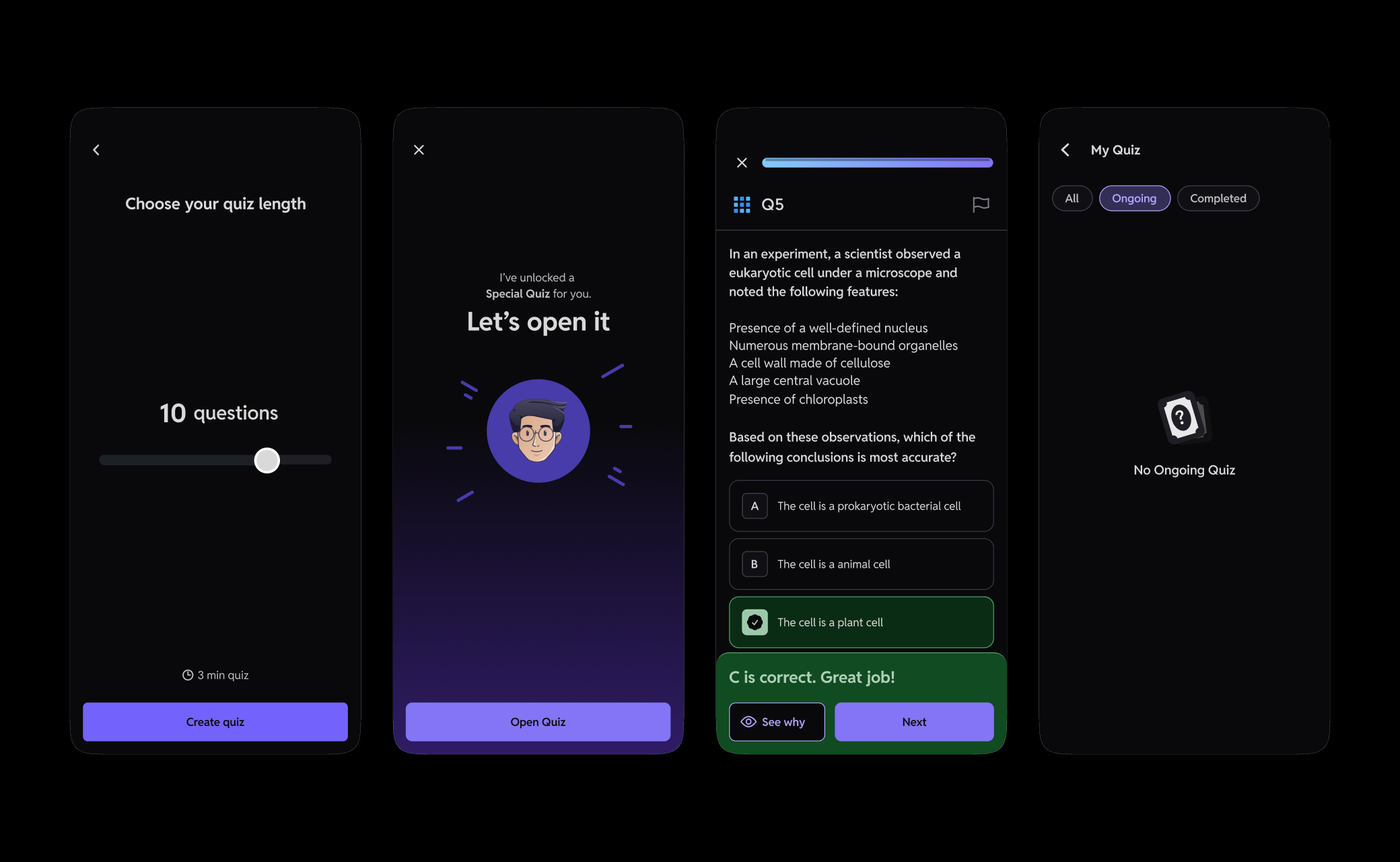
Impact
The project is in rollout, measured against three targets, with a goal of growing DAU from 45K to 2L.
- Retention: keeping returning users inside the habit loop.
- Engagement: the first quiz lands an early win, fast.
- Acquisition: free users can try the AI tools without hitting a paywall.
Thanks
This couldn’t have happened without a diverse set of stakeholders: front-end and back-end engineers, QA, and product.
Managing perceived latency, and building confidence before the first result appears, mattered more than the quiz interface itself.